
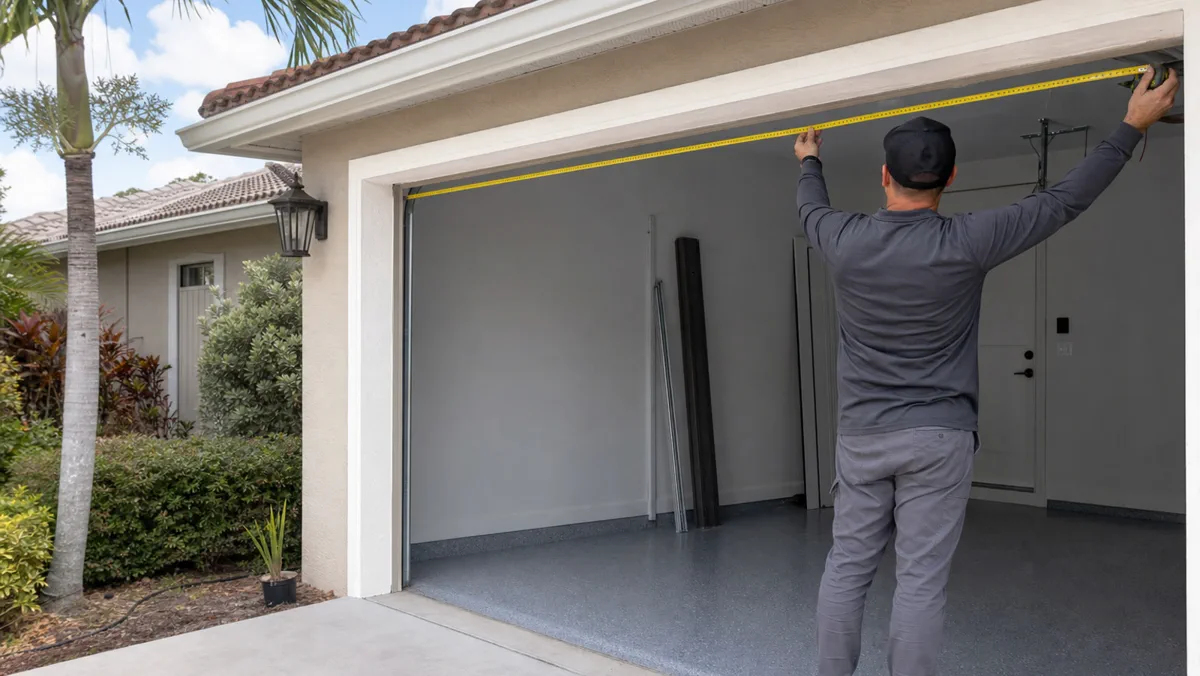
Opening and track layout
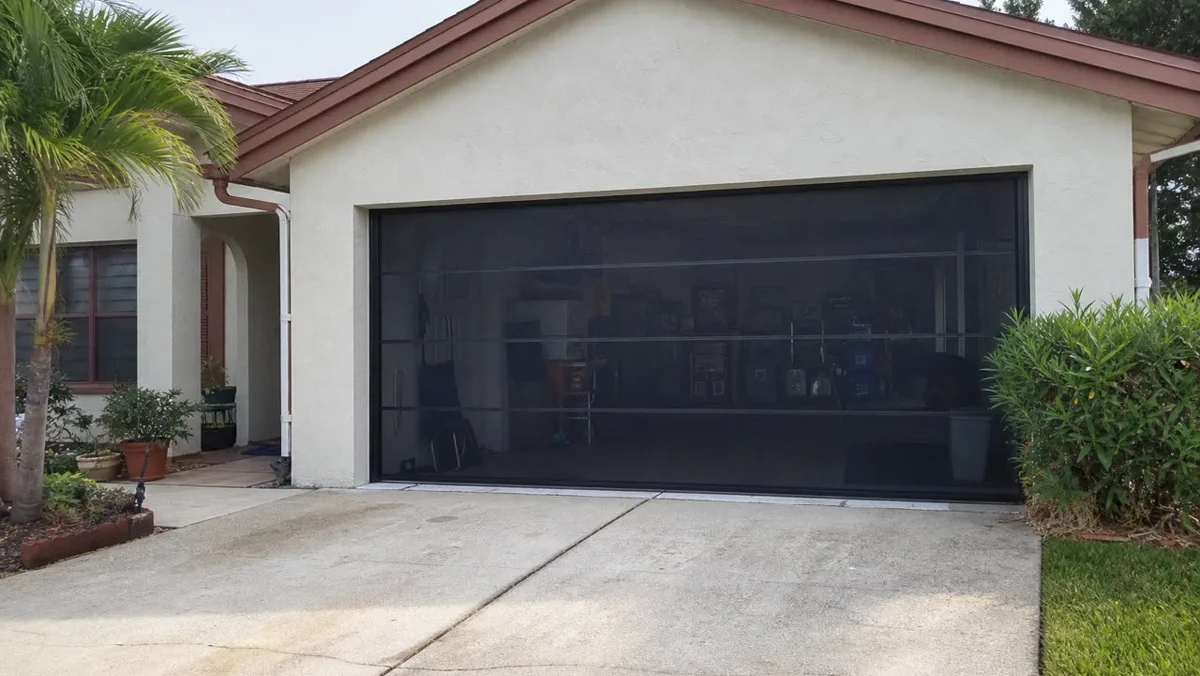
A straight-on view of the opening helps a screen professional discuss width, height, threshold condition, side clearance, track space, and daily garage use.
Garage screen help in Port St. Lucie
Port St. Lucie Garage Screens helps homeowners with garage screen installation, repair, motorized screens, retractable systems, and mesh choices. If your garage is hot, buggy, hard to use, or already has a damaged screen, call or use the form to ask what may make sense next.
What garage screen projects involve
A straight-on view of the opening helps a screen professional discuss width, height, threshold condition, side clearance, track space, and daily garage use.

A second look at the opening can highlight clearance issues, side-room limits, ceiling obstructions, and details that affect screen style or installation sequence.
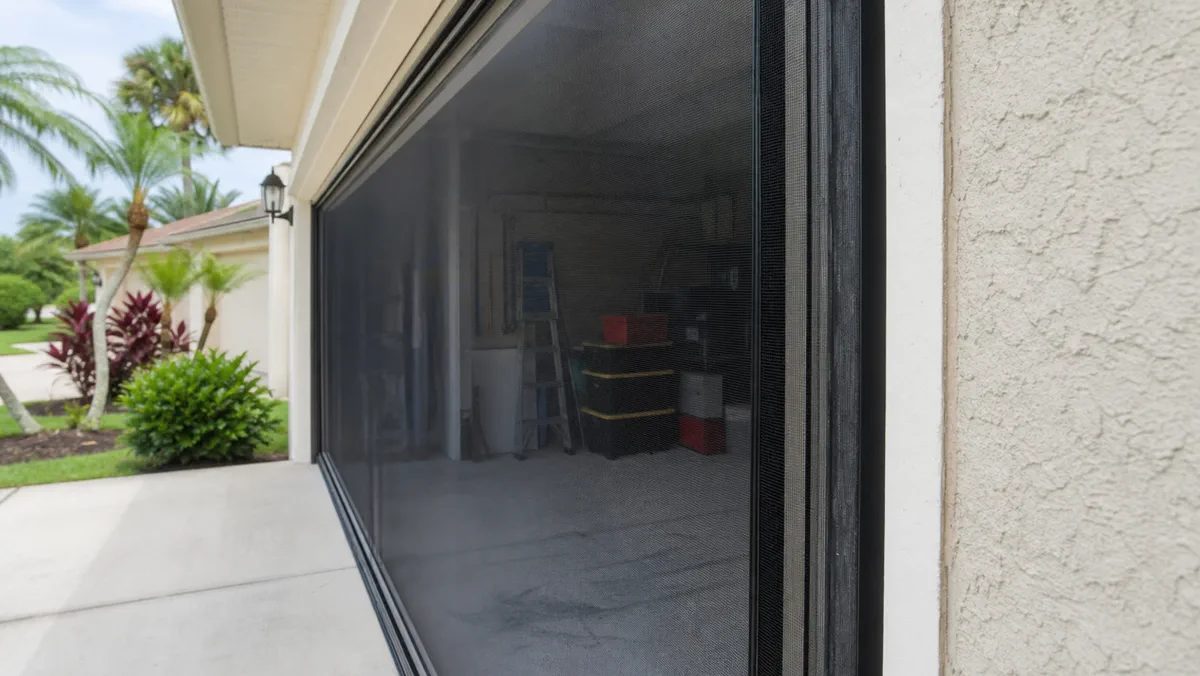
Close-up work details make it easier to discuss mesh, track, latch, and bottom seal expectations before scheduling a visit.
When a garage screen may help
On the Treasure Coast, the garage often becomes a workshop, exercise space, storage room, laundry overflow, or a place to sit in the evening breeze. A screen can make that space more comfortable, but only if it fits the opening and the way the household actually uses the garage.
That means looking beyond a generic screen size. The right plan considers whether vehicles still need daily access, how much shade or privacy is desired, whether small insects are the main frustration, and whether a manual or motorized system makes the most sense.
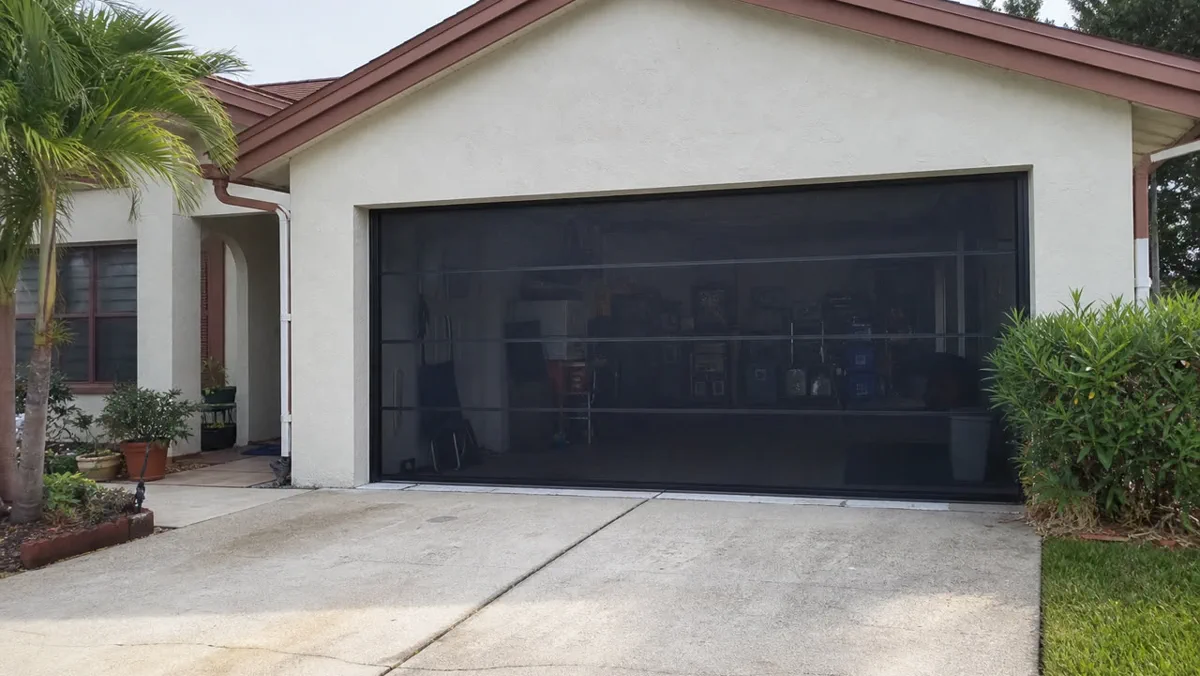
Why screen problems happen
Garage screens in Port St. Lucie deal with daily heat, coastal humidity, wind-driven rain, blown sand, pests, and frequent opening and closing. Over time, mesh can stretch or tear, tracks can get dirty or bent, rollers and latches can wear, and bottom seals may stop keeping insects out.
New installations can also disappoint when the screen style does not match the way the garage is used. A garage that stores bikes, tools, laundry, vehicles, or workout equipment may need a different screen setup than a garage used mostly for shade and evening airflow.
Garage screen services
Install a garage screen system that turns the garage into a breezier, more usable space while keeping insects and loose debris out.
Plan a motorized garage screen for convenient shade, airflow, and insect control without wrestling with panels every day.
Add retractable screening so the garage can stay open when you want airflow and close cleanly when the screen is not needed.
Fix torn mesh, dragging panels, loose track, latch issues, or screen hardware problems before the system becomes frustrating to use.
Choose mesh that fits the goal: airflow, privacy, shade, pet resistance, or tighter protection from mosquitoes and no-see-ums.
Cost and scope factors
Garage screen pricing and scope depend on the opening, the screen style, mesh choice, track condition, wind exposure, and whether the job is a new installation, repair, rescreening, or motorized upgrade.
You do not need to sort all of that out before calling. A short description of the garage and what you want the screen to solve is enough to start, and the follow-up can confirm the details that affect the quote.
Repair or replacement
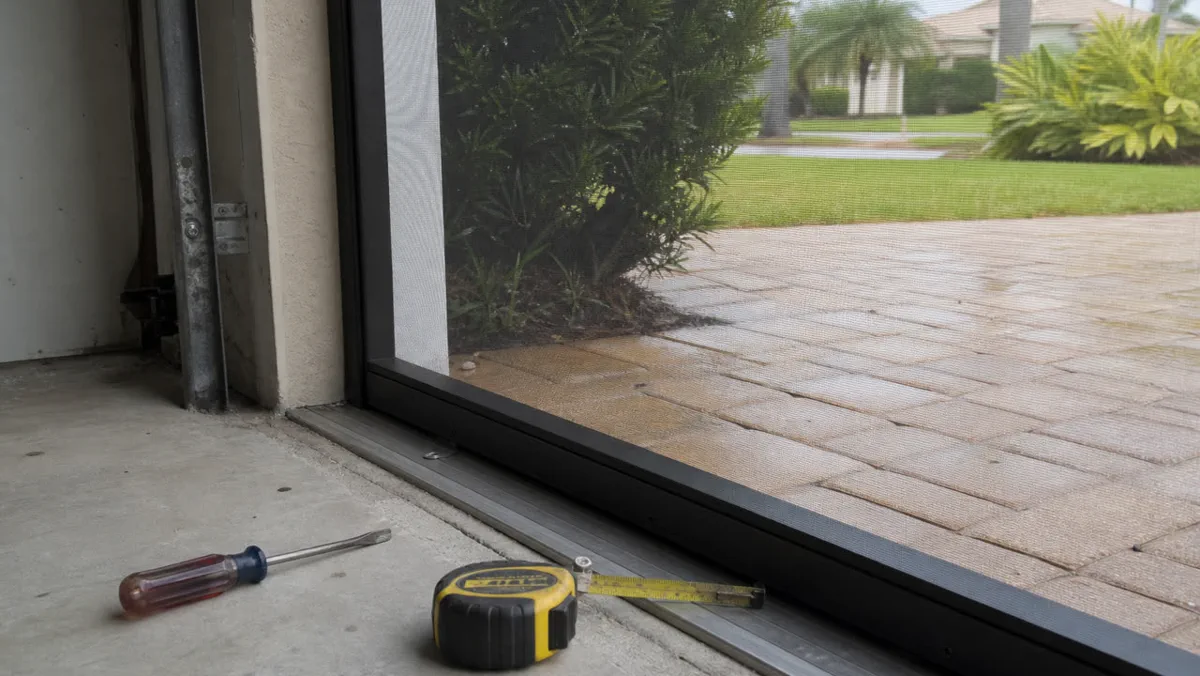
Some garage screen problems can be handled as repair or rescreening, especially when the frame and track still operate correctly. Torn mesh, loose spline, worn rollers, latch issues, small alignment problems, and minor hardware failures may not require a full new system.
Replacement becomes more likely when the screen is badly out of square, the track is damaged, the screen no longer moves smoothly, or the homeowner wants a different style such as motorized, retractable, privacy, pet-resistant, or tighter insect-control mesh.
Call or submit the short form with the main problem or goal. The follow-up can narrow down whether the next step is installation, repair, mesh replacement, or a different screen option for the way you use the garage.
Request garage screen helpGarage screen FAQs
These answers explain common choices and make it easier to call or use the form even if you are not sure which garage screen service fits.
Yes. Start with how you want the garage to work: more airflow, insect control, privacy, shade, pet resistance, easier daily use, or a repair to an existing screen. Opening size, threshold condition, track clearance, and ceiling obstructions can be reviewed during follow-up instead of figured out before you call.
Motorized screens can be convenient when the garage is used often and the opening needs to stay clean and easy to operate. Retractable and manual systems can still be practical for lower-use garages. The better choice depends on opening size, budget, wind exposure, power access, and whether storage or vehicles need to pass through frequently.
Humidity, salt air, sun exposure, wind-driven rain, and mosquito pressure all matter. Heavier mesh can improve durability and privacy, while more open mesh can keep airflow stronger. Hardware, tracks, fasteners, and bottom seals should be discussed with local conditions in mind, especially near the river, lagoon, or more exposed neighborhoods.
Sometimes. Torn mesh, loose spline, bent track, worn rollers, latch issues, and small hardware failures may be repairable. Replacement becomes more likely when the frame is out of square, tracks are badly damaged, the system no longer moves smoothly, or the homeowner wants a different mesh, privacy level, or motorized setup.
A plain-language note about bugs, heat, privacy, pets, storage, hard-to-move panels, torn mesh, track issues, or the kind of garage use you want is enough to start. The follow-up can clarify whether the project is installation, repair, rescreening, or a different screen system.
A properly planned screen should respect the existing garage door path and everyday access needs. The installer still needs to check track clearance, opener hardware, ceiling space, the slab edge, and whether vehicles, bikes, or storage items will interfere with the screen during normal use.
Treasure Coast service areas